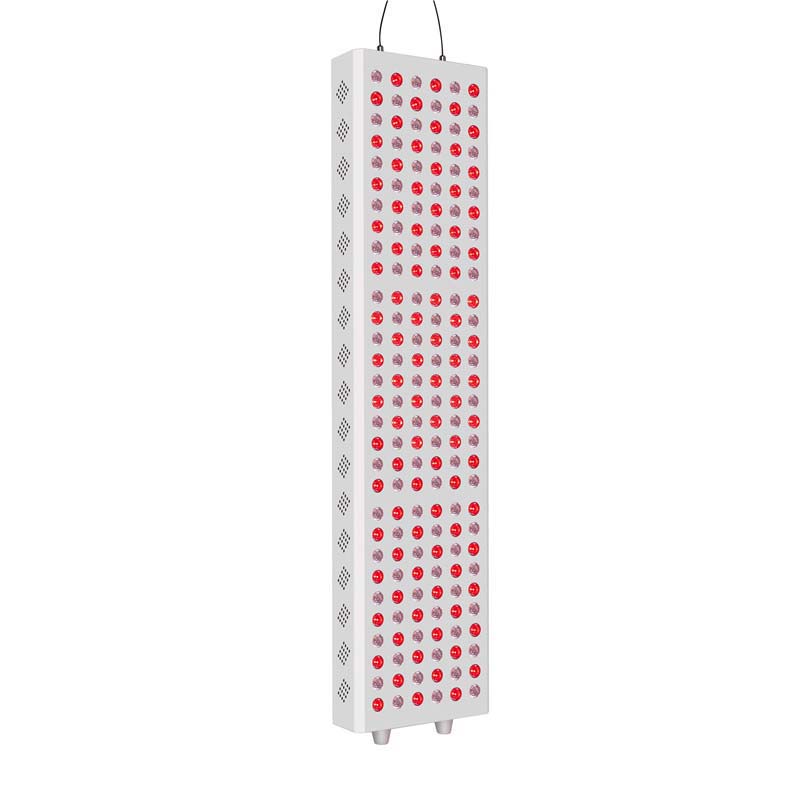
The most effective wavelengths for red light therapy (RLT) are those found within the “therapeutic window” of 630nm to 660nm (Visible Red Light) och 810nm to 850nm (Near-Infrared Light). To achieve the best results, you should choose a device that offers a combination of these wavelengths simultaneously, as red light addresses superficial skin concerns like collagen production and acne, while near-infrared light penetrates deeper to treat muscle recovery, joint pain, and even neurological health. By using a multi-wavelength spectral array, you ensure that every layer of tissue—from the epidermis to the bone—receives the optimal dose of photonic energy required for cellular repair.
1. What are the most effective red light therapy wavelengths for cellular health?
When we discuss “red light therapy,” we are actually referring to a specific range of the electromagnetic spectrum that interacts with human biology. This interaction is known scientifically as fotobiomodulering. Not all light is created equal; while the sun provides a full spectrum, only specific narrow bands of light trigger the healing responses we desire without the risks of DNA damage associated with UV rays.
The Power of the 600nm Range (Visible Red)
The 600nm range is the “beauty” spectrum. These wavelengths are short enough to be absorbed primarily in the skin’s upper layers.
- 630nm: This wavelength is ideal for targeting the very surface of the skin. It is frequently used to treat fine lines, sagging skin, and even non-melanoma skin cancers in clinical settings.
- 660nm: Often called the “sweet spot” for red light, the 660nm wavelength penetrates slightly deeper than 630nm. It is highly effective at reducing systemic inflammation and accelerating wound healing by stimulating the formation of new blood vessels.
The Power of the 800nm Range (Near-Infrared)
Near-infrared (NIR) light is invisible to the human eye but can be felt as a gentle, subtle warmth. These wavelengths have much longer frequencies, allowing them to bypass the skin and reach internal structures.
- 810nm: This is a powerhouse for the brain. Research suggests 810nm has a unique ability to cross the blood-brain barrier, offering potential benefits for stroke recovery and traumatic brain injury (TBI).
- 830nm: Frequently used in post-surgical recovery, 830nm light helps to speed up bone repair and reduce the downtime associated with aesthetic procedures by controlling infection and swelling.
- 850nm: This is the gold standard for deep tissue. It reaches the muscles, tendons, and even organs, making it the preferred choice for athletes looking to enhance performance and recovery.
[Image of mitochondrial ATP production]
2. Why is the ‘therapeutic window’ of 600nm to 900nm essential for light absorption?
The “therapeutic window” is a specific range of light frequencies that can penetrate human tissue most effectively. Outside of this window, light is either absorbed too quickly by water and hemoglobin (at higher infrared frequencies) or reflected and scattered by the skin’s surface (at shorter UV or blue frequencies).
Overcoming Cellular Resistance
Inside every cell are mitokondrier, often called the “powerhouses of the cell.” These organelles are responsible for creating adenosine triphosphate (ATP), the energy currency of life. In many people, mitochondrial function is impaired due to oxidative stress and the buildup of nitric oxide.
The Nitric Oxide Problem: When cells are stressed, nitric oxide binds to cytokrom c-oxidas (the enzyme that processes oxygen). This blocks the cell from producing energy. Red and NIR light “kicks” the nitric oxide out, allowing oxygen to rush back in and restart energy production.
Thermal Safety vs. Photobiomodulation
A common misconception is that “more heat equals more healing.” This is often true for infrared saunas, which use wavelengths above 1,000nm to vibrate water molecules and create sweat. However, for true cellular healing, we want light, not heat. Wavelengths beyond the 1,000nm mark risk thermal damage to sensitive tissues like the eyes or the testes. The 600nm–900nm window provides the maximum biological benefit with negligible heat, making it safe for daily use.
3. How do specific wavelengths like 660nm and 850nm penetrate different tissue depths?
The depth of penetration is determined by the physics of the wavelength. Longer wavelengths have lower frequencies and can “wiggle” through denser materials more easily than short, high-frequency waves.
The Layered Journey Through the Skin
To understand how light works, we must look at the barrier it is trying to cross.
- The Epidermis: This is the waterproof outer shield. It’s thin (about 0.05 mm to 1.5 mm). 630nm light excels here, addressing acne-causing bacteria and surface tone.
- The Dermis: Located beneath the epidermis, this layer contains collagen and elastin fibers. 660nm light reaches this depth, stimulating fibroblasts to produce the proteins that keep skin bouncy and youthful.
- The Hypodermis: This is the fatty layer where larger blood vessels live. 810nm and 830nm light begin to dominate here.
- Deep Tissue and Bone: Ultimately, the 850nm wavelength can travel through the skin entirely, reaching several centimeters into muscle tissue and even bone.
The Scattering Effect
Light doesn’t just travel in a straight line once it hits your body. It scatters, much like a flashlight beam hitting a glass of milk. When you use multiple wavelengths (like 630, 660, 810, 830, and 850nm) simultaneously, these photons bounce off each other and the surrounding tissue. This creates a “net of light” that ensures no pocket of tissue is left untreated.
4. Who can benefit most from multi-wavelength spectral arrays in RLT devices?
While a single-wavelength device is better than nothing, a multi-wavelength spectral array is designed for those who want professional-grade results at home.
The Performance Athlete
Athletes often suffer from a combination of surface-level bruising and deep-tissue muscle fatigue. By using a device that offers both 660nm and 850nm light, the athlete treats the inflammation in the skin and the oxidative stress in the muscle fibers at the same time. Studies have shown that NIR light used before a workout can actually delay muscle fatigue and increase the number of repetitions an athlete can perform.
The Biohacker and Longevity Enthusiast
If your goal is systemic health, you need a spectrum that addresses mitochondrial dysfunction across the entire body. The inclusion of the 810nm wavelength is particularly exciting for this group, as it supports cognitive function and neuroprotection, potentially fending off age-related decline.
The Chronic Pain Sufferer
For individuals with arthritis or neuropathy, the pain is often deep within the joints or nerves. Standard red light won’t reach those areas. The 830nm and 850nm wavelengths are essential here, as they can penetrate the dense connective tissue of the knees, hips, and spine to reduce pain signals and promote the regeneration of nerve endings.
5. Where does light energy go once it enters the human skin layers?
Once the photons enter the body, they don’t just disappear; they are converted from light energy into biological energy.
Absorption by Chromophores
In the human body, the primary “receiver” for light is a molecule called a chromophore. Specifically, the enzyme Cytokrom c-oxidas acts as the antenna for red and NIR light.
- Step 1: The photon hits the enzyme.
- Step 2: The enzyme is energized, causing it to release nitric oxide (a vasodilator that can be harmful in excess).
- Step 3: Oxygen binds to the enzyme in place of the nitric oxide.
- Step 4: The Krebs cycle (the process of cellular respiration) accelerates, producing a surge of ATP.
Systemic Benefits: The “Bystander Effect”
Interestingly, the benefits of red light therapy aren’t just localized to where the light touches. Because light increases blood flow and reduces systemic inflammation, the “energized” blood cells circulate throughout the rest of the body. This means that treating your torso could actually have a positive effect on the healing of a wound on your leg, albeit to a lesser degree than direct exposure.
6. When should you expect to see visible results from consistent red light therapy?
Red light therapy is a “slow and steady” treatment. Unlike a pharmaceutical that might mask a symptom in thirty minutes, RLT is physically rebuilding your cells.
The Timeline of Healing
- Immediate (1–24 Hours): You may feel a slight reduction in pain or a sense of relaxation due to increased blood flow and the release of endorphins.
- Short-Term (1–4 Weeks): Most users report improved skin clarity, reduced “brain fog,” and faster recovery from exercise.
- Long-Term (1–4 Months): This is where the magic happens. Collagen production takes time to manifest as firmer skin. Chronic conditions like psoriasis or deep-seated joint pain typically require 8 to 12 weeks of consistent use (3–5 times per week) to show significant improvement.
The Importance of Irradiance
The “when” is also determined by the power of your device. This is measured as Bestrålning in mW/cm². If your device has low irradiance, you would need to stand in front of it for hours to get a therapeutic dose. High-powered panels (delivering 100+ mW/cm²) allow for effective sessions in just 10 to 20 minutes.
Supplementary Features of Advanced Red Light Panels
Feature 1: Modular Connectivity and Multi-Light Expansion
Modern high-end RLT panels often feature modular designs. This allows a user to start with a small, targeted panel for facial treatments and eventually link multiple panels together to create a full-body setup. These systems use interlocking brackets and power cables that sync the lights, ensuring that the spectral output is uniform across the entire treatment area.
Feature 2: Digital Control via Smartphone Integration
The latest generation of red light therapy devices includes Bluetooth or Wi-Fi connectivity. This allows users to control the ratio of Red to NIR light via an app. For example, if you are doing a morning session for skin health, you might set the device to 100% Red and 0% NIR. For a post-workout evening session, you might flip that ratio to focus on deep muscle recovery.
Vanliga frågor (FAQ)
1. Is Red Light Therapy safe for my eyes?
Generally, yes, and some studies even suggest it can help with age-related macular degeneration. However, because the lights are extremely bright, they can cause discomfort. Most manufacturers provide goggles. If you are treating your face, it is best to keep your eyes closed. Always consult an ophthalmologist if you have existing eye conditions.
2. Can I “overdo” it and get too much light?
Yes. There is a concept in biology called the Biphasic Dose Response. In simple terms: a little bit of light is good, but too much can actually cancel out the benefits. If you stay in front of the light for too long, the cells become over-stressed and stop responding. Stick to the recommended 10–20 minutes per session.
3. Do I need to remove my clothes for the therapy to work?
For the specific area you are treating, yes. Red and NIR light cannot penetrate through most fabrics effectively. Even thin gym leggings or a t-shirt can block up to 80-90% of the light photons. For maximum results, the light should have a direct path to your skin.
Slutsats
Selecting the right red light therapy wavelength is the difference between a superficial glow and a deep, cellular transformation. While the industry standard has long been a simple 1:1 ratio of 660nm and 850nm light, the science has evolved. We now know that a “spectral array” encompassing 630nm, 660nm, 810nm, 830nm, and 850nm provides a synergistic effect that no single wavelength can match. By understanding the 5W1H of light therapy—What it is, Why it works, How it penetrates, Who it’s for, Where it goes, and When to expect results—you can make an informed investment in your long-term health. Whether you are chasing athletic peaks or simply trying to age with grace, the key lies in the power of the spectrum.
 English (United States)
  French (Canada)
  English (UK)
  English (Australia)
  English (Canada)
  English (New Zealand)
  English (South Africa)
  Bulgarian
  Croatian
  Arabic
  Czech
Czech  Danish
  Dutch
Dutch  Estonian
  Finnish
  French (France)
  Turkish
  Swedish
  Spanish
  Slovenian
  Georgian
  German
  Greek
Greek  Hebrew
  Hungarian
  Icelandic
  Indonesian
  Italian
  Japanese
  Korean
  Latvian
  Lithuanian
  Slovak
  Serbian
  Portuguese
  Luxembourgish
  Irish
Irish  Romanian
  Russian